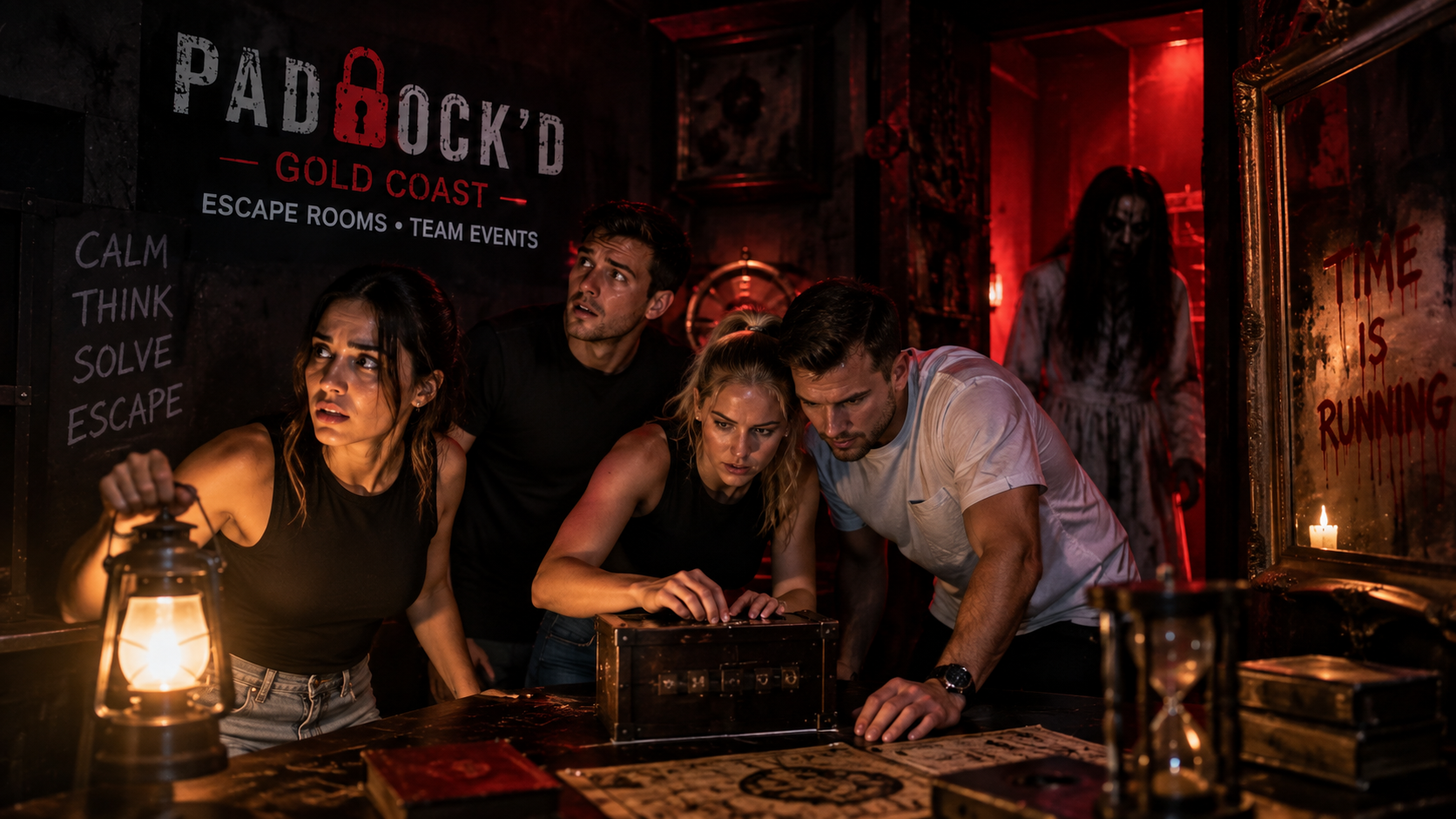
Heart racing, clock ticking, and someone in a mask just walked past. Here’s the short answer for surviving horror escape rooms with your head still in the game: slow your breathing, stick close to your team, and treat every scare as part of the story rather than a real threat.
Horror escape rooms are designed to rattle you a little. That’s the point. But panicking too much can slow your team down and make the puzzles feel far harder than they actually are. A few simple mental habits can keep you sharp, even when things get properly tense.
Why Do Horror Escape Rooms Make It Harder to Think?
Fear triggers a physical stress response, faster heart rate, tunnel vision and a rush of adrenaline. That’s brilliant if you’re running from a real threat, but it’s not exactly ideal for spotting a hidden clue tucked behind a bookshelf.
This is why some players freeze up in horror-themed escape rooms, even ones they’d normally breeze through in a calmer, non-scary setting. Understanding this reaction is the first step to managing it.
The Difference Between Real Fear and Game Fear
It helps to remind yourself that a horror escape room experience is built entirely around performance, lighting and sound, not actual danger. Once your brain accepts that distinction, it becomes much easier to enjoy the scares without losing your ability to think.
How Can You Stay Calm During a Horror Escape Room?
Staying composed doesn’t mean pretending you’re not scared. It just means managing that fear so it doesn’t take over the whole session.
Control Your Breathing
Slow, deliberate breathing is one of the simplest ways to counter the adrenaline spike from a scary escape room experience. A few seconds of steady breathing after a jump scare helps bring your focus back to the puzzle in front of you.
Stick Close to Your Team
Fear tends to feel far more manageable in a group. Staying physically close to your team, rather than wandering off alone in a haunted escape room, keeps everyone feeling more supported and better able to think clearly together.
Remind Yourself It’s a Game
Repeating a simple mental cue, this is a game, this is a show, can help pull your brain out of pure fight-or-flight mode and back into problem-solving mode. It sounds simple, but it works surprisingly well mid-session.
How Do You Think Clearly Under Time Pressure?
Even without the horror element, the ticking clock in any escape room challenge adds its own kind of pressure. Combine that with scares, and clear thinking becomes even more valuable.
Slow Down to Speed Up
It sounds counterintuitive, but rushing usually costs more time than it saves. Taking a beat to properly read a clue, rather than scanning it in a panic, often leads to faster solutions overall.
Talk Through What You’re Seeing
Saying clues out loud, even ones that seem obvious, helps the whole team process information faster. In scary puzzle rooms specifically, verbalising what you notice also stops small details getting lost in the tension of the moment.
Divide and Conquer, Carefully
In larger horror escape rooms for groups, splitting up to search different areas can save time, but it’s worth staying within earshot of your team so nobody’s left facing a scare completely alone.
What Are Common Mistakes Players Make Under Pressure?
A few habits tend to trip players up more than the puzzles themselves.
Overthinking Simple Clues
Fear can make players assume every puzzle must be more complicated than it looks. Sometimes the simplest explanation really is the answer, so it’s worth stepping back before overanalysing.
Not Communicating Fast Enough
In the middle of a scare, it’s easy to forget to share what you’ve found. Building a habit of calling out discoveries immediately keeps the whole team moving, rather than one person quietly holding onto a useful clue.
Letting One Scare Derail the Whole Session
A single big jump scare can throw a team off their rhythm for several minutes if they let it. Acknowledging the fright, having a laugh about it, and getting straight back to the puzzles keeps momentum on your side.
Tips for First-Time Horror Escape Room Players
If it’s your first time stepping into a horror escape room experience, a bit of preparation goes a long way.
- Choose your group carefully. Go with people who’ll support each other rather than scatter at the first scare.
- Ask about intensity levels beforehand. This helps set realistic expectations for how scary the room will actually be.
- Agree on a simple communication system. Even something as basic as calling out “found something” keeps the team coordinated.
- Expect a few jumps. Knowing scares are coming, even without knowing exactly when, makes them easier to shake off quickly.
- Have fun with it. The best stories afterwards usually come from the moments you got properly spooked, so don’t be afraid to embrace it.
Are Horror Escape Rooms Good for Team Building?
Yes, and often more effective than a standard team escape room without the horror element. Managing fear together, staying calm under pressure and communicating quickly are all skills that translate well beyond the room itself.
This is part of why horror escape rooms for corporate team building have grown in popularity, giving workplace teams a shared, high-pressure challenge that’s memorable for all the right reasons.
How Padlock’d Helps Players Handle the Pressure
At Padlock’d in Surfers Paradise, horror escape rooms are designed to build tension gradually, giving players a chance to settle into the story rather than being overwhelmed from the first second.
Staff can walk you through intensity levels and what to expect before you book, helping first-timers and horror fans alike choose a room that matches their comfort with fear and pressure. Beginner-friendly options sit alongside more intense horror experiences with live actors, so every group can find their fit.
Frequently Asked Questions
Why do I freeze up during horror escape rooms? Fear triggers a stress response that can narrow focus and slow decision-making. Recognising this reaction is the first step to managing it during your session.
How can I calm down quickly after a jump scare? A few slow, deliberate breaths and a quick reminder that it’s a performance, not real danger, usually helps bring focus back within seconds.
Is it normal to feel scared during a horror escape room? Yes, that’s the intended effect. Most players feel some fear, and it usually fades once they settle into the puzzle-solving side of the experience.
What’s the best group size for staying calm in a horror escape room? Smaller, close-knit groups often find it easier to communicate and support each other, though larger groups can work well with a clear communication system in place.
Do horror escape rooms get easier with practice? Many players find that repeated visits build familiarity with the format, making it easier to manage fear and focus on the puzzles over time.
Are horror escape rooms suitable for nervous first-timers? Yes, many venues offer lower-intensity horror rooms, giving nervous players a gentler introduction before trying more intense experiences.
Final Thoughts
Horror escape rooms are built to rattle you, but staying calm, communicating clearly and remembering it’s all part of the show can turn a stressful scare into one of the most memorable parts of the night. With the right mindset, the fear becomes part of the fun rather than something that slows your team down.
Ready to put these tips into practice? Padlock’d’s horror escape rooms in Surfers Paradise are built with a range of intensity levels, so you can ease in gently or dive straight into the deep end. Check the details on the Padlock’d FAQ page before you go, or book your session and see how well your nerves hold up.