Wondering what you’ll actually be solving before you book? Here’s the short answer: Gold Coast escape rooms mix logic puzzles, hidden object challenges, code-breaking, pattern recognition and physical mechanisms, usually several types within a single themed room.
That variety is exactly what keeps escape rooms interesting for repeat players. No two rooms rely on the same mix of puzzles, which means every escape room challenges Gold Coast venues throw at you feels a little different to the last.
Why Do Escape Rooms Use Different Puzzle Types?
A room built around a single puzzle style would get repetitive fast. By mixing formats, venues keep every player engaged, since different puzzles reward different strengths, whether that’s logical thinking, sharp observation or quick pattern recognition.
This variety also supports group play. In escape rooms for groups, a mix of puzzle types means everyone gets a chance to shine somewhere, rather than the whole session hinging on one type of challenge.
What Are Logic Puzzles in Escape Rooms?
Logic puzzles are the backbone of most escape room activities Gold Coast venues design. These challenges ask players to work through a set of clues or rules step by step to reach a single correct answer.
Common Examples of Logic Puzzles
Sequence puzzles, where numbers or symbols need to be arranged in the right order, are a classic example. Sudoku-style grids and simple deduction puzzles, where you eliminate wrong answers based on given clues, also show up regularly across themed escape rooms Gold Coast wide.
These puzzles reward patience and methodical thinking, making them a great fit for players who enjoy working through a problem carefully rather than rushing.
What Are Hidden Object and Observation Puzzles?
Hidden object challenges ask players to physically search a room for clues, objects or symbols tucked into the environment. These puzzles test observation just as much as problem-solving.
Why These Puzzles Work So Well in Themed Rooms
Because they’re built directly into the set design, hidden object puzzles reinforce the room’s story. A clue hidden inside a book, behind a painting or tucked into a prop feels like a natural part of the world, rather than an artificial add-on.
This is part of what makes immersive escape rooms Gold Coast venues design feel so different to a standard puzzle book. The environment itself becomes part of the challenge.
What Are Cipher and Code-Breaking Puzzles?
Cipher puzzles ask players to decode a hidden message using a key, pattern or substitution system. These range from simple letter-shift codes through to more complex symbol-based ciphers.
How Cipher Puzzles Fit Into the Story?
In a well-designed escape room, a cipher usually ties directly into the theme, a coded message from a missing person, an old journal entry, or a set of instructions left behind by a previous occupant of the room.
Cipher puzzles tend to be a highlight for players who enjoy a bit of a mental challenge, since they often require testing a few approaches before landing on the right solution.
What Are Physical and Mechanical Puzzles?
Not every challenge in an escape room happens purely in your head. Physical puzzles involve interacting with the environment directly, opening locked boxes, aligning mechanisms, or manipulating props to reveal the next clue.
Examples of Physical Puzzle Mechanics
Combination locks, sliding panels, weighted levers and puzzle boxes are all common examples. These puzzles add a hands-on element that pairs well with the mental challenge of logic and cipher puzzles elsewhere in the room.
This mix of physical and mental puzzles is part of why escape room challenges Gold Coast venues offer feel so different to a purely digital puzzle app.
What Are Pattern Recognition Puzzles?
Pattern recognition puzzles ask players to spot a repeating sequence, shape or relationship between clues scattered around the room. These often connect multiple smaller clues into one larger solution.
Why These Puzzles Reward Teamwork
Because the pattern often isn’t obvious from a single clue alone, these puzzles tend to work best when the whole team shares what they’ve found. Someone might spot a shape on one side of the room, while another player notices a matching symbol elsewhere, and it’s only by comparing notes that the pattern becomes clear.
Do Horror Escape Rooms Use Different Puzzle Types?
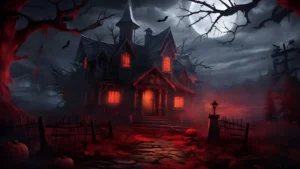
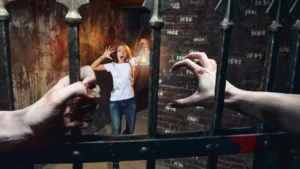
Horror escape rooms Gold Coast venues offer still rely on the same core puzzle types, logic, hidden objects, ciphers and physical mechanisms, but often layer them with additional tension through lighting, sound and live actors.
The puzzles themselves aren’t necessarily harder, but solving them under a more intense, suspense-filled atmosphere adds a different kind of challenge entirely, testing composure just as much as problem solving.
How to Choose an Escape Room Based on Puzzle Style
If you know your group’s strengths, it’s worth choosing a room that leans into them.
- For methodical thinkers: look for rooms known for strong logic puzzle sequences.
- For sharp-eyed players: rooms with a heavier focus on hidden object challenges will likely suit better.
- For code-breaking fans: ask staff whether a room features cipher-heavy puzzles.
- For hands-on players: rooms with plenty of physical mechanisms tend to keep tactile players engaged.
- For mixed groups: a room with a broad mix of puzzle types usually works best, giving every player a chance to contribute.
Tips for Solving Different Puzzle Types Faster
A few general habits help regardless of which puzzle type you’re facing.
- Communicate every find. Sharing clues immediately, even small ones, helps connect patterns faster as a team.
- Don’t ignore the obvious. Some puzzles look more complicated than they actually are.
- Split logic and physical tasks. Assigning different puzzle types to different team members keeps the whole group working simultaneously.
- Ask for hints when stuck. Most venues offer clues if your team gets stuck on a particular puzzle type.
- Stay open to trial and error. Especially with ciphers and combination locks, testing a few approaches is often part of the process.
How Padlock’d Designs Its Puzzle Mix
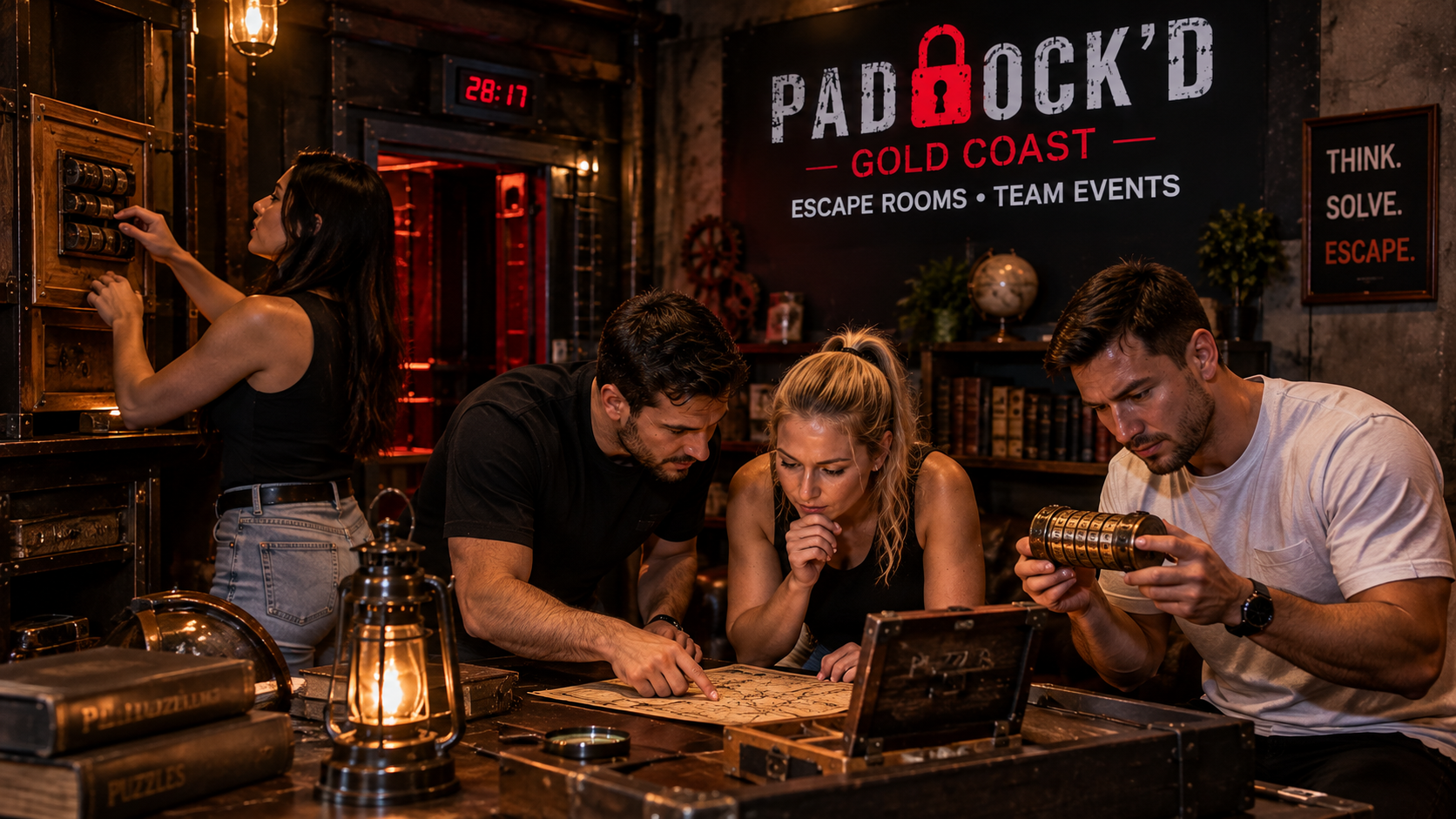
At Padlock’d in Surfers Paradise, each themed room is built around a deliberate mix of puzzle types, logic challenges, hidden objects, ciphers and physical mechanisms, all tied together through immersive storytelling.
This variety means every room feels distinct, whether you’re working through a family-friendly adventure or a horror escape room with live actors. Staff can also point you toward a room that suits your group’s preferred puzzle style before you book.
Frequently Asked Questions
What’s the most common type of puzzle in escape rooms? Logic puzzles tend to appear most often, since they form a reliable backbone that other puzzle types can build on within a themed story.
Are hidden object puzzles harder than logic puzzles? Not necessarily harder, just different. Hidden object puzzles test observation, while logic puzzles test structured reasoning, so difficulty depends on your natural strengths.
Do all escape rooms include cipher or code puzzles? Not always. Some rooms lean more heavily on physical mechanisms or hidden objects, so it’s worth asking staff if code-breaking is a big part of a specific room.
Are physical puzzles common in Gold Coast escape rooms? Yes. Combination locks, sliding panels and puzzle boxes are common across most themed escape rooms, adding a hands-on element alongside the mental challenges.
Do horror escape rooms have more difficult puzzles? Not usually. The puzzle types are often similar to standard rooms, but the added suspense and atmosphere can make them feel more challenging to solve under pressure.
How can I find out which puzzle types a specific room uses? Venue staff can usually give a general sense of a room’s puzzle style, whether it leans toward logic, hidden objects, ciphers or physical mechanisms.
Final Thoughts
Gold Coast escape rooms rely on a properly varied mix of logic puzzles, hidden objects, ciphers, pattern recognition and physical mechanisms, which is exactly what keeps the format feeling fresh from one room to the next. Knowing what to expect makes it easier to choose a room that plays to your group’s strengths.
If you’re keen to test your puzzle-solving style across a few different challenges, Padlock’d’s range of themed rooms in Surfers Paradise offers plenty of variety to explore. Browse the current lineup on the Padlock’d homepage, check puzzle style details on the FAQ page, or book your session and put your problem-solving to the test.