Not sure what you’re in for? Here’s the short answer: The most common puzzles in Gold Coast escape rooms are search and find tasks, number and code puzzles, word riddles, sequence puzzles, lock-based challenges and teamwork puzzles that need everyone talking.
Whether you call it an escape game, an escape hunt or a locked room challenge, the format works the same way. Once you can recognise each puzzle type, you’ll solve them faster and enjoy the session far more.
What Is the Most Common Escape Room Puzzle?
Search and find puzzles take the top spot. Almost every room asks you to hunt through the set for hidden clues, objects or symbols before anything else can happen.
They’re popular because they get everyone moving from the first minute. There’s no special skill needed, just sharp eyes and a bit of curiosity.
How to Solve Search and Find Puzzles
Work in zones. Split the room into sections and assign each person an area, so nothing gets searched twice and nothing gets missed.
Check the unlikely spots too. Clues often hide under furniture, inside books or behind props that look purely decorative.
What Are Number and Code Puzzles?
Number and code puzzles ask you to work out a digit sequence or decode a message to open a lock or reveal the next step. These are a staple of escape room puzzles because they pair neatly with combination locks.
Common Examples
A set of numbers hidden around the room might need adding up, or a coded phrase might need a simple letter swap to read. Sometimes the answer is built from details you’ve already collected, like dates, symbols or room numbers.
How to Solve Them
Write everything down as you find it. A single number on its own rarely means much, but three or four together often form a clear pattern.
If a code isn’t working, try reversing it or changing the order before assuming you’ve missed something.
What Are Word Puzzles and Riddles?
Riddles and word puzzles test language and lateral thinking rather than logic alone. You might unscramble letters, complete a phrase or decipher a cryptic clue that points to an object in the room.
How to Solve Them
Read the clue aloud. Hearing it often triggers a connection that silent reading misses, and a teammate might spot an angle you haven’t considered.
Don’t take every word literally. Riddles love double meanings, so ask what else a phrase could suggest.
What Are Sequence and Pattern Puzzles?
Sequence puzzles ask you to put items in the right order, whether that’s symbols, colours, objects or steps. Pattern puzzles go one step further, asking you to spot a rule linking several clues together.
Why They Reward Teamwork
The pieces of a pattern are often scattered across the room, so no single player sees the full picture. One person spots a symbol in one corner, another finds a matching one elsewhere, and it’s only by comparing notes that the pattern appears.
What Are Lock and Mechanism Puzzles?
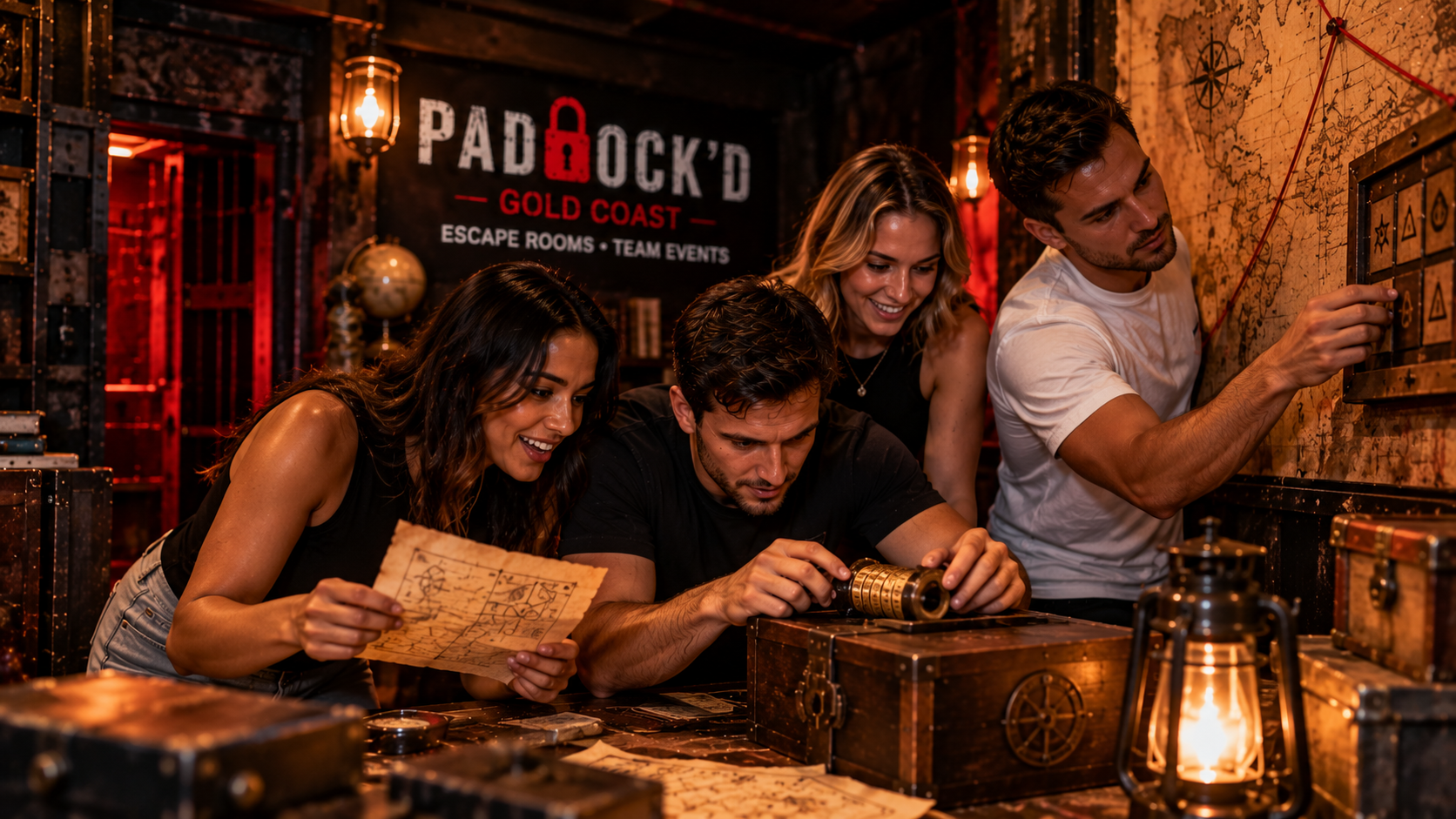
Lock and mechanism puzzles are the hands-on part of the experience. Padlocks, puzzle boxes, sliding panels and levers all need to be opened or moved in the right way.
Types of Locks You’ll Meet
Number locks need a digit code, letter locks need a word, and directional or key-based locks need a specific sequence or object. Each type usually ties back to a puzzle you’ve already solved elsewhere in the room.
A Quick Tip
If you’ve got a lock but no code yet, don’t waste time guessing. Note what type it is, then keep an eye out for clues that match its format.
What Are Teamwork Puzzles?
Some puzzles are designed so no single player can solve them alone. One person might see a clue that another needs to act on, or two players might need to work at the same time on different sides of the room.
These puzzles are a big reason escape rooms work so well for team building activities. They highlight communication, trust and quick coordination in a way that’s hard to fake.
Do Horror Rooms Use the Same Puzzle Types?
Yes. Horror escape rooms Gold Coast venues offer use the same core puzzle types, search and find, codes, riddles, sequences, locks and teamwork challenges.
The difference is the atmosphere. Dim lighting, sound effects and live actors make the same puzzle feel more intense, so staying calm and communicating clearly matters even more.
How Do You Choose a Room Based on Puzzle Style?
Think about your group’s natural strengths before booking.
- Sharp-eyed players: look for rooms with plenty of search and find tasks.
- Number lovers: ask about code-heavy rooms with lots of combination locks.
- Word fans: riddle-focused rooms will play to your strengths.
- Big groups: rooms with several puzzle paths let everyone work at once.
- First-timers: a beginner-friendly room with a mix of puzzle types is the safest place to start.
Quick Tips for Solving Any Puzzle Faster
A few habits help no matter which puzzle you’re facing.
- Share every discovery. Say clues out loud, even the ones that seem small.
- Keep clues together. Gather items in one spot so nothing gets lost.
- Move on when stuck. Come back to a tricky puzzle with fresh eyes.
- Ask for a hint. Most venues offer them, and using one keeps the fun going.
- Watch the clock, not the pressure. A steady pace beats a panicked rush.
How Padlock’d Mixes Its Puzzles
At Padlock’d in Surfers Paradise, each themed room blends several of these puzzle types into one connected story. You might search for a hidden object, decode a message and open a lock, all as part of a single storyline.
That mix suits every kind of player, from first-timers to experienced groups. Staff can also guide you toward a room that matches your group’s preferred style before you book.
Frequently Asked Questions
What’s the most common type of puzzle in escape rooms? Search and find puzzles are the most common, since nearly every room starts with hunting for hidden clues and objects.
Are escape room puzzles hard for beginners? Not usually. Most rooms are designed so first-timers can succeed, with hints available if your team gets stuck.
Do I need to be good at maths to enjoy escape rooms? No. Number puzzles tend to use simple arithmetic or pattern spotting rather than anything advanced.
What’s the difference between a code puzzle and a lock puzzle? A code puzzle gives you the answer, such as a number or word, while a lock puzzle is the physical object that answer opens.
Can I solve puzzles on my own in a group escape room? Many puzzles can be solved solo, but teamwork puzzles need two or more players, so staying in contact with your group helps.
How many puzzles are in a typical escape room? It varies by room, but most sessions include a series of connected puzzles that build toward a final goal within about sixty minutes.
Final Thoughts
Once you know the common puzzle types, Gold Coast escape rooms feel far less mysterious and a lot more fun. Search and find, codes, riddles, sequences, locks and teamwork challenges show up again and again, and spotting them quickly gives your team a real edge.
If you’d like to try your new puzzle-spotting skills, Padlock’d’s themed rooms in Surfers Paradise offer a great mix to practise on. Browse the lineup on the Padlock’d homepage, check room details on the FAQ page, or book your session and see how many puzzles your team can crack.